• Skip to primary navigation
  • Skip to main content
  • Skip to primary sidebar

CLASSICAL Decorative Arts BLOG™

...more artistic musings

  • Homepage
  • Past Work
    • PUBLIC Commissions
      • HISTORICAL Restoration at Chicago Theatre
      • RESTORATION at The Mayslake Peabody Estate
      • HISTORICAL OSC in Springfield IL
      • LOUIS SULLIVAN and the Chicago Stock Exchange
      • The HISTORIC CABLE HOUSE in Chicago – Louis Sullivan
      • George WASHINGTON Savings Bank Orland Park IL
      • FAUX Bois ~ FAUX Marble
      • STENCILS
      • PROCUREMENT: Business AWARDS
    • PRIVATE Commissions
      • POMPEIAN Room Recreated
      • GILDING
        • GILDING: Using Dutch Metal
        • The SCHIBIN Ceiling
      • 18c Parchment Restoration
      • Traditional OLD WORLD Restoration
  • BLOG POSTS
    • The Perfect Color
    • The Adventures of a Website Muse
    • LOUIS SULLIVAN Rediscovered : Lecture
    • MODEL MARATHON
    • LIZ STEEL Online Education
  • MUSEUM VISITS
    • MILWAUKEE Art Museum
    • CANOVA: Sketching in Clay
  • HISTORICAL OBSERVATIONS
    • THE BEGINNINGS
      • Okay, I’LL HANG IT SOMEWHERE ELSE – IMPRESSIONISTS part 1
      • Okay, I’LL HANG IT SOMEWHERE ELSE – IMPRESSIONISTS part 2
    • IT’S ALL BEEN DONE BEFORE
    • COLOR CHOICES and APPLICATIONS
      • PAINT IT ANY COLOR AS LONG AS ITS BLUE
    • HAIL TO THE GIRLS
      • Marie BRAEQUEMOND: a little known IMPRESSIONIST
      • SOFONISBA Anguissola
      • IMPRESSIONIST Pioneers: Berthe Morisot and Mary Cassatt
      • SUZANNE Valadon
    • HEY…are ya gunna pay me?
      • TURNS OUT MICHELANGELO WORKED the GIG ECONOMY
      • MICHELANGELO: The Man and The Myth
  • GALLERY
    • TRAVEL SKETCHING: Liz Steel Classroom
    • INTERNATIONAL SALON
    • DRAWINGS
    • WATERCOLOR
    • OIL PAINTING
  • Contact Us

Hail To The Girls

marie_braquemond

Marie BRAEQUEMOND: a little known IMPRESSIONIST

by

…more artistic musings

Currently, there is a movement to recognize female IMPRESSIONISTS’ that have been unacknowledged. One such artist I came across quite by accident is MARIE OUIVORON.
marie_braquemond

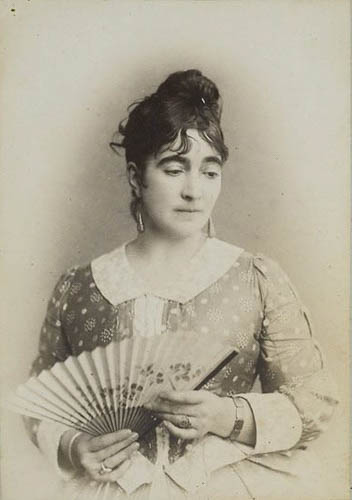
Self-portrait 1870

MARIE WAS BORN in Brittany 1840 under extreme hardship. Not as socially or financially positioned as MARY CASSATT (1844-1926) or BERTH MORISOT (1841-1895). Because of this, she was forced to be mostly self-taught, creating her first painting with pigments made from flowers out of her garden.

A family portrait painted in 1857, her first exhibition submission to the exclusive PARIS SALON, was extremely well received and by 1859 she was painting professionally. After seeing Marie’s work, the Neoclassical painter Jean-Auguste-Dominque INGRES (1780-1867) invited her to his studio for limited instruction.
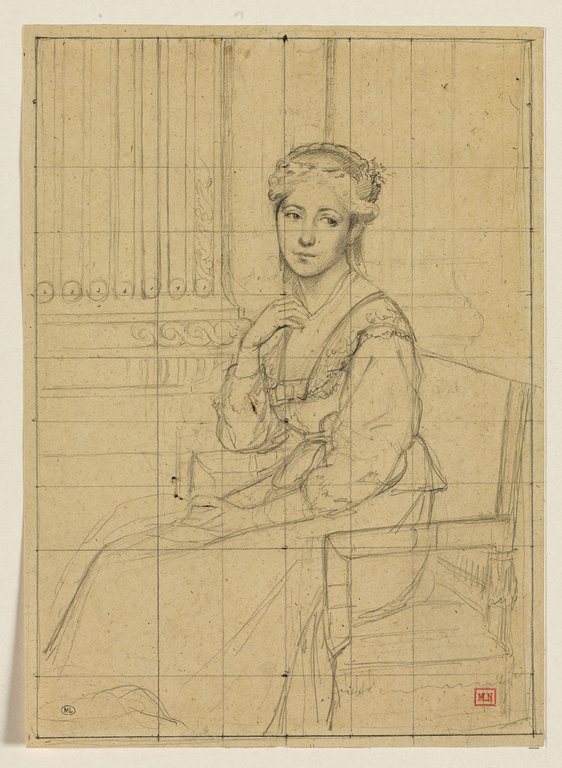
Portrait of Artist’s Sister 1860

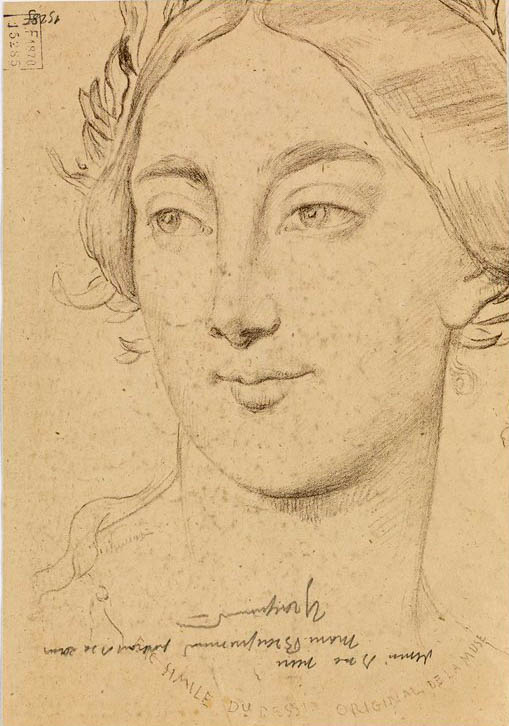
As she progressed with her artistic development, Marie was asked by the Director General of French Museums to create copies of Old Master’s work that were exhibited at the Louvre. It was while she was sketching at the museum she met her future husband Felix Bracquemond.
marie_braquemond

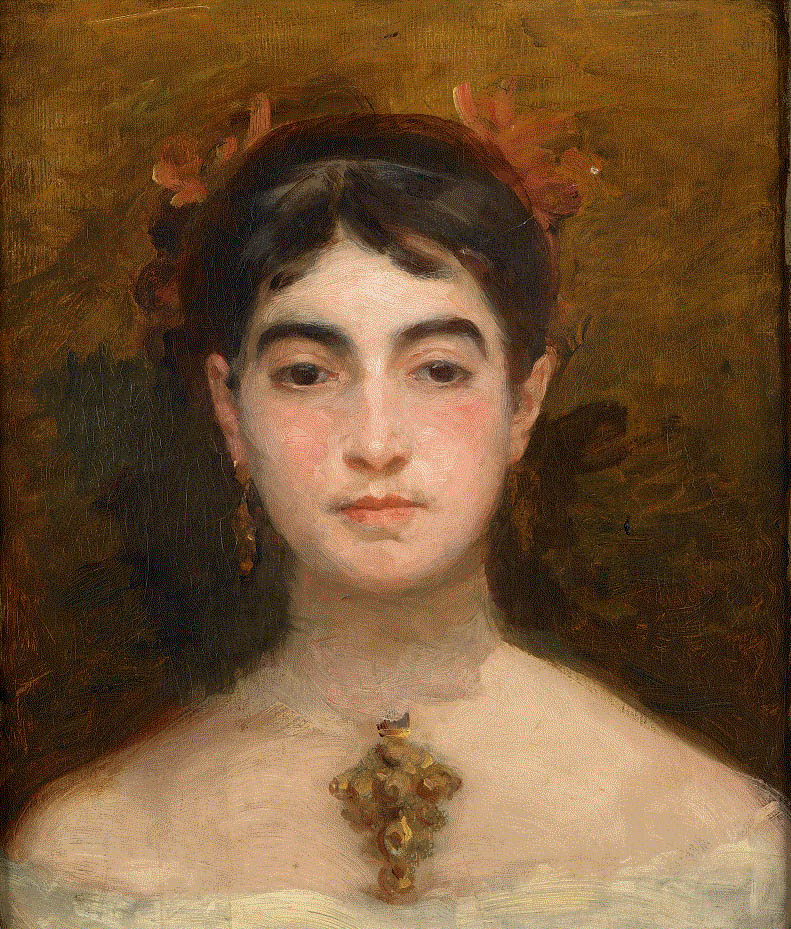
Head of a Muse 1860

Felix Bracquemond was a successful popular engraver and close friend of the young IMPRESSIONISTS. Thru Felix, Marie met Gaugin, Monet and Degas. Soon, after meeting these artists and to her husband’s strong disapproval, her art soon began to reflect the young movements ideals. Among his friends Felix was known for having a winning personality. But, Marie soon discovered his overbearing sense of authority in addition to being completely inflexible regarding his opinions on how art should or would be created. Strongly believing in the long established traditional ways a painting was to be executed. Even how the paint was to be applied to the canvas.
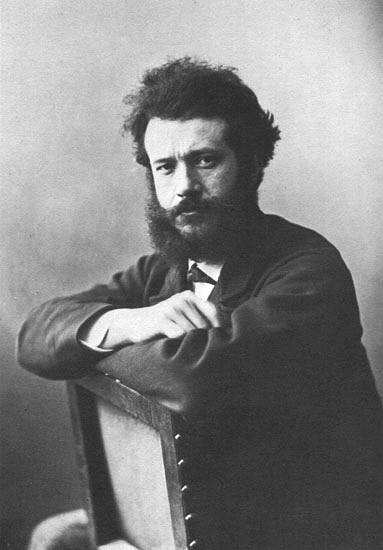
Felix Braequemond 1865

ENGRAVING involves an organized distribution of black and white values. Felix was successful in business as an established technician giving him early financial security. Thereby inclusion into the then popular artists soiree. Because of the very nature of this process Felix strongly believed that Art had to be done in the studio as a means of achieving perfection with the supremacy of a rendering that is completed in black and white. In strong contrast to the creating of work in the new painting style, IMPRESSIONISM.

THE THEORY BEHIND IMPRESSIONISM went completely against the centuries old long accepted traditional techniques of creating art. Painting in Plein-air, using bright pigments, and rendering every day subject matter defined the new movements platform. This style was quickly embraced by Marie after meeting Gaugin and being taught by the artist how to prepare her canvas’ so that she could create the intense values she was struggling to achieve. However, this new way of approaching art was met with extreme opposition by Felix.

in 1874, Marie along with Mary Cassatt and Berthe Morisot were the only women taking part in the first IMPRESSIONIST EXHIBITION. This was the first of several times she exhibited with the independent artists, contributing in the fourth (1879), fifth (1880), and the eighth (1889) the last show. Eva Gonzales, another less known female artist, would be included in later exhibitions.

BECAUSE Marie defied her husband’s authority regarding the IMPRESSIONISTS’ style he refused to show her paintings. According to their son Pierre, “…Felix seldom showed her work to their friends…when he did eventually compliment her, it would be in private…” Felix would often rant against the IMPRESSIONISM style and try to convince his wife that her ambition was, to quote her son, “incurable vanity”. Often telling her that the art she was creating would never be accepted or valued. Felix firmly believed that ENGRAVING was a true art form unlike paintings being created by the “rebels” who went against tradition.
marie_braquemond

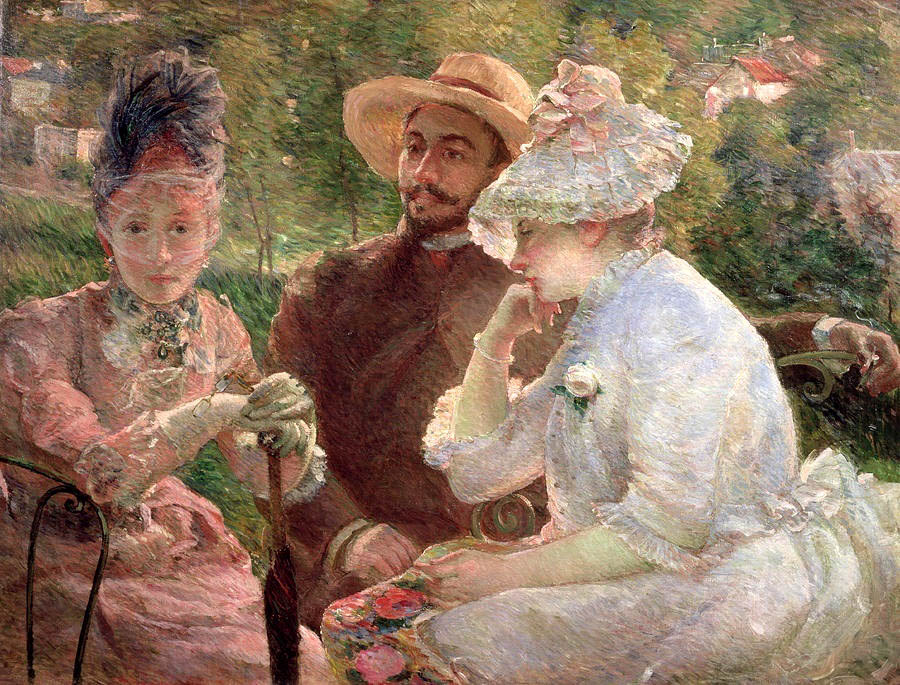
On the Terrace at Sevres 1880, Marie Bracquemond

AS HER TALENT GREW and Marie gained recognition as an accomplished artist. So did the anger of her husband as he would only provide abusive opinions of wife’s growing portfolio of work. According to Pierre, his father would hide his mother’s paintings from their guests, forbidding Marie from showing her work publicly.
marie bracquemond

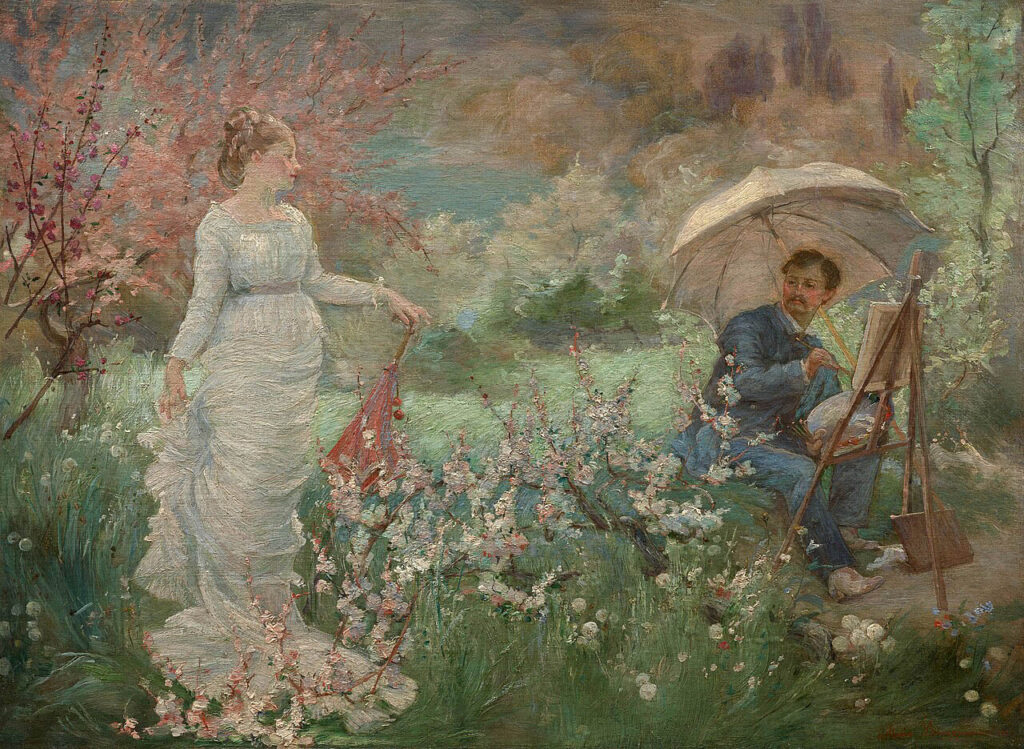
Study from Nature 1880, Marie Bracquemond
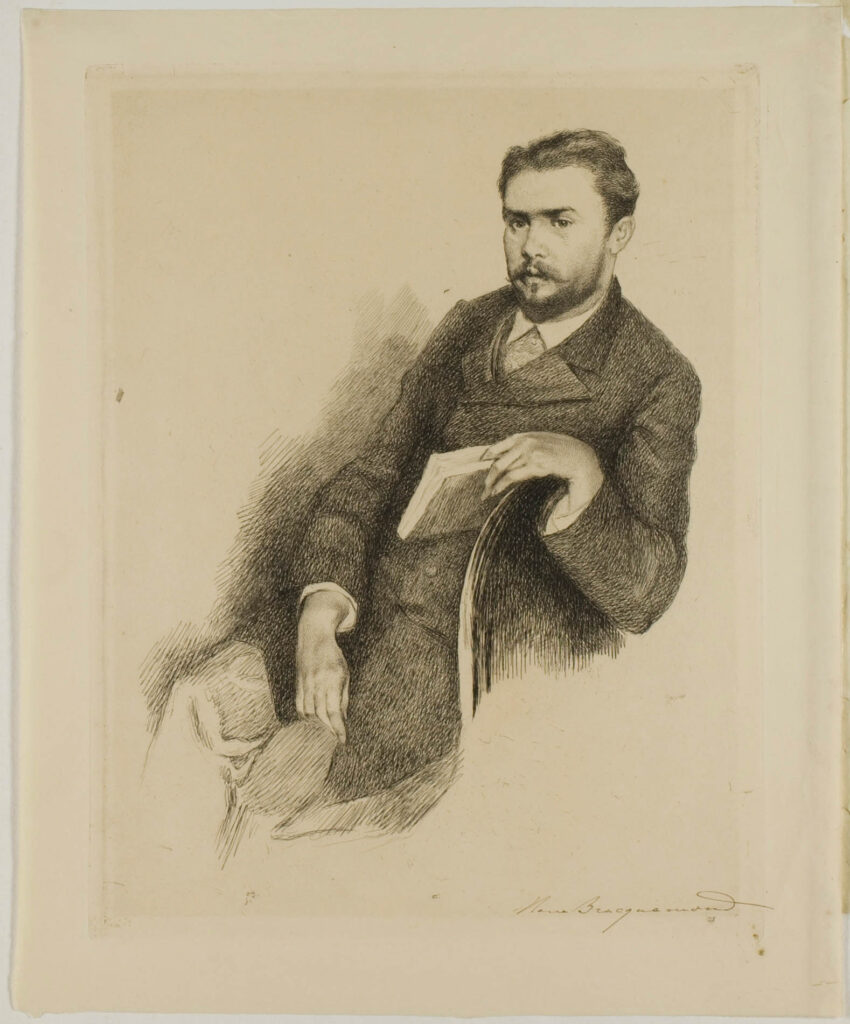
marie_braquemond

Portrait de Gustave Geffroy ~ Art Institute of Chicago

The IMPRESSIONISTS Exhibition in 1886 was Marie’s last. The artist submitted examples of work using her earlier painting techniques and not any incorporating Gaugin’s influence. None of these earlier painting techniques embraced the color palette or style of the new movement in art that was gaining popularity. Therefore, these early paintings totally dismissed the the IMPRESSIONISTS’ style. Making it apparent to all that she had finally submitted to Felix’s demands on how art should be rendered.
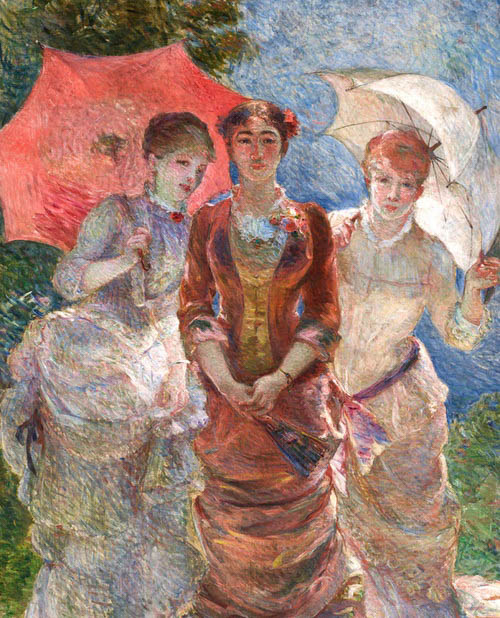
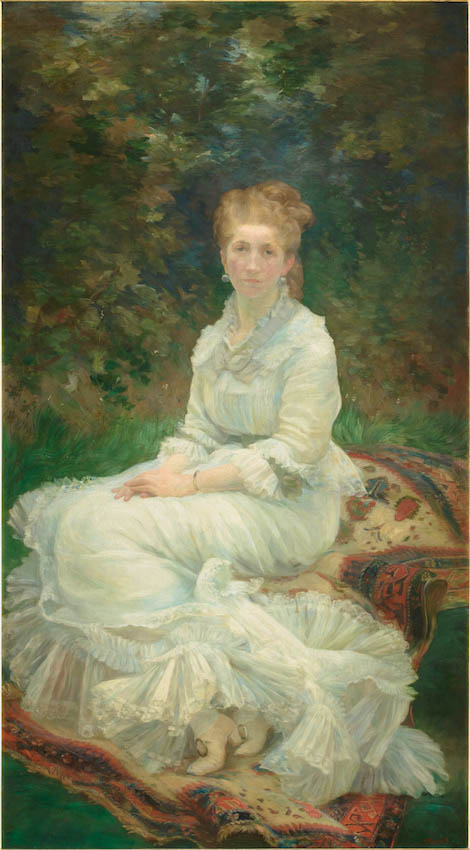
marie_braquemond
marie_braquemond

Three Women with Parasols 1880 (right) ~ The Lady in White 1880, Marie Bracquemond (left)
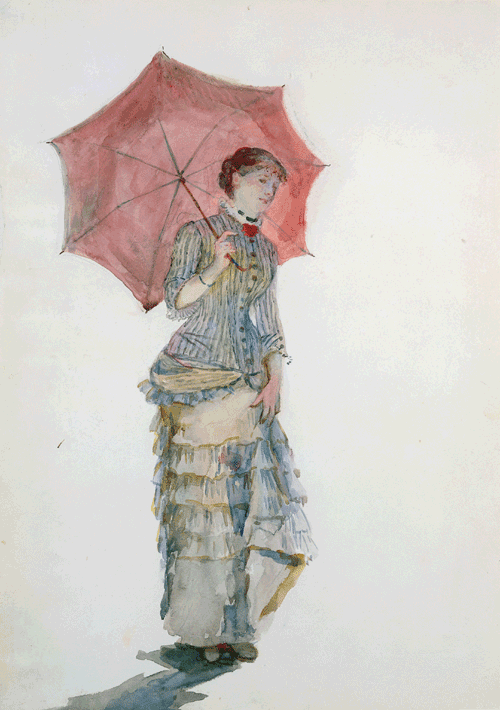
Woman with an Umbrella 1880, Watercolor

“…she bears his clear dominance with a kind of fear…” wrote her son Pierre in his unpublished work.

marie_braquemond

Portrait de Pierre Bracquemond ~ Le Petit malade

Completely frustrated by the IMPRESSIONISTS‘ way of representing painted imagery along with their increasing popularity, Felix rejected Parisian life style altogether. He decided to retire and live in isolation while insisting that his wife submit to his wishes and become isolated as well.
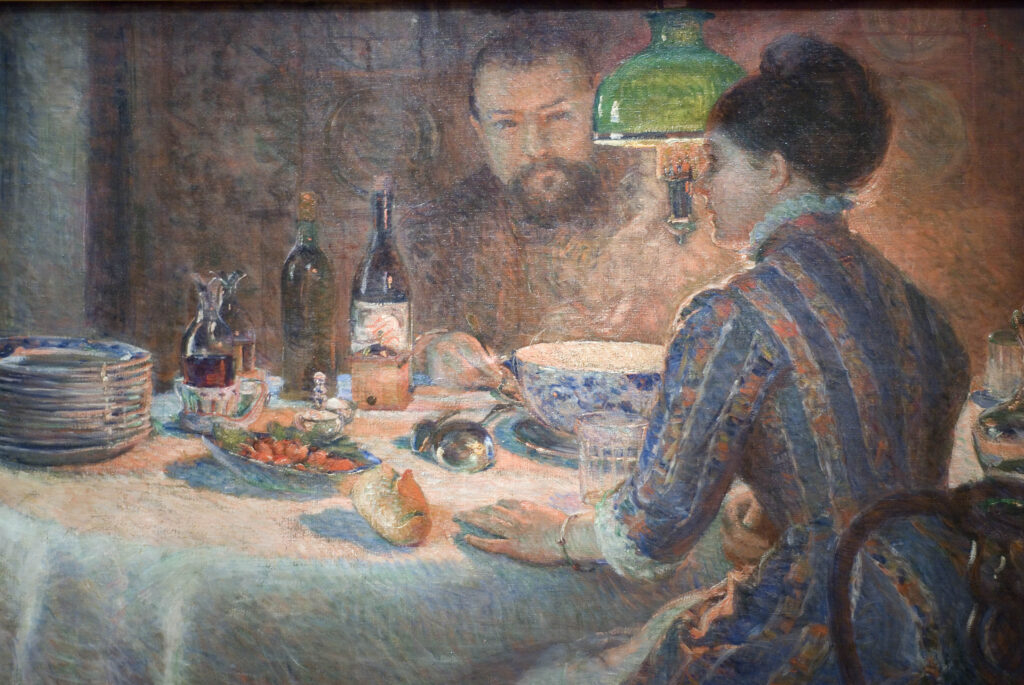
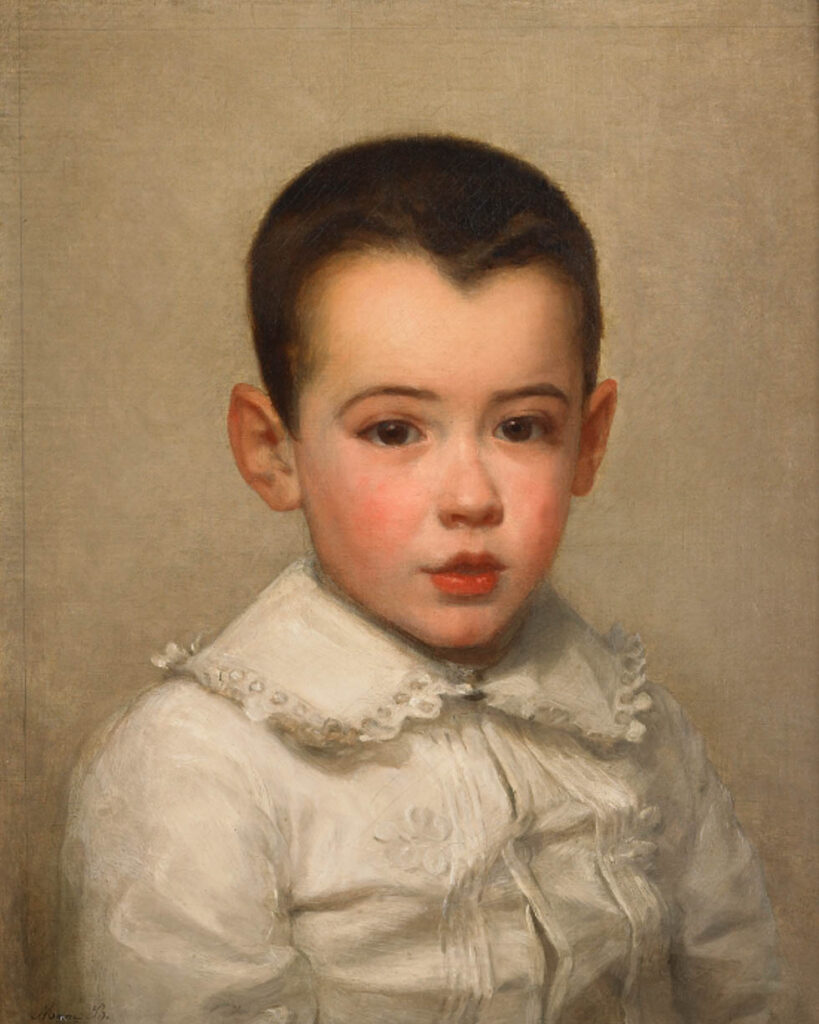
marie_braquemond
marie_braquemond

Under the Lamp 1887 (right) ~ Pierre Bracquemond as a enfant 1878, Marie Bracquem (left)

By 1890 Marie decided no longer to exhibit professionally and at her husbands insistence gave up painting almost altogether. She seldom practiced her craft but when Marie did she painted the flowers from her yard or close family members. And, on the rare occasion when she did paint Felix refused access to his completely furnished studio. Thus, forcing his wife to store the art supplies in her bedroom.
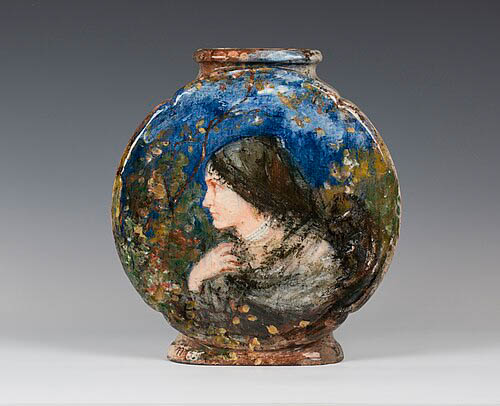
marie bracquemond

Haviland & Co. Limoges Ceramique Impressioniste Barotine French Pottery Vase 1880
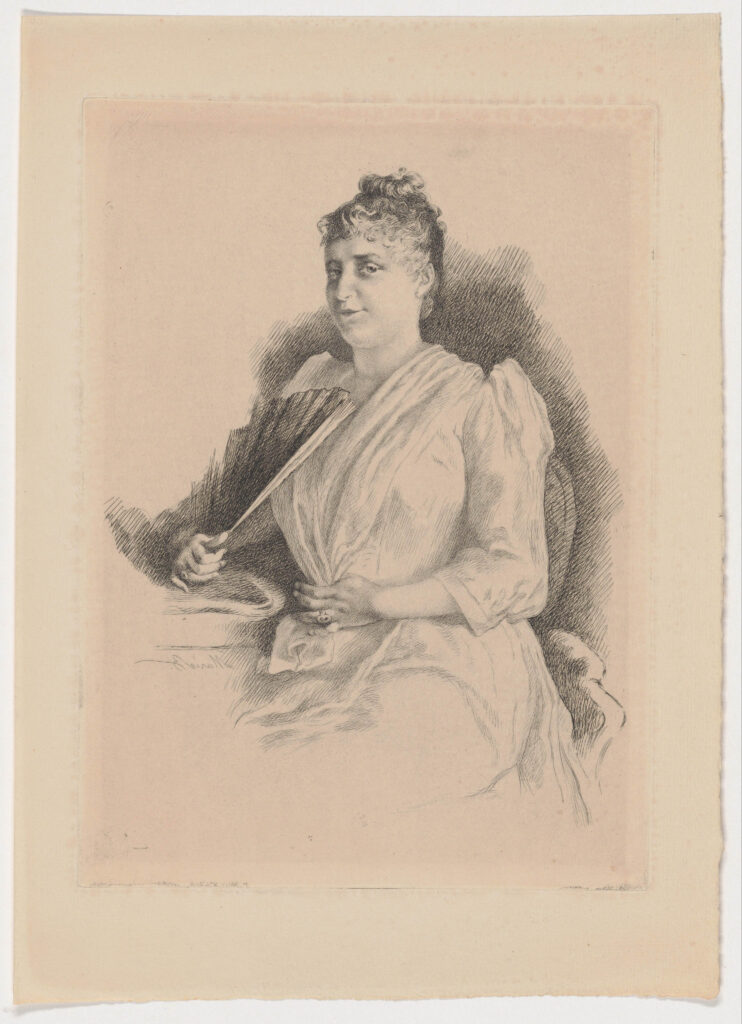
marie bracquemond

Self-Portrait de Marie Bracquemond 1888

After years of bullying Marie choose to abandons painting altogether using her time to “…running the household…’. Marie Ouivoron Braequemond dies in Paris on January 17, 1916.

Further Reading

WOMEN IMPRESSIONISTS: Ingrid & Max Hollein (editors), Pfeiffer (Author)

PARIS 1874 THE IMPRESSIONIST MOVEMENT: Sylvia Patry (editor, et. al.)

Home » Historical Observations » Hail To The Girls

CLASSICAL Decorative Arts BLOG™ 2009-2026 – CLASSICAL DECORATIVE ARTS by Cynthia™ 1992 -2017

A gold and black 2 5 years anniversary logo

CREATED BY CDA DESIGNS© 2026

copyright© 2009-2026 ~ CLASSICAL Decorative Arts BLOG™ ~ page layout and web content© ~ all rights reserved
Related posts

  • SUZANNE Valadon
    In relation to
    Hail To The Girls

Filed Under: Hail To The Girls

SUZANNE Valadon

by

...more artistic musings

Home » Historical Observations » Hail To The Girls

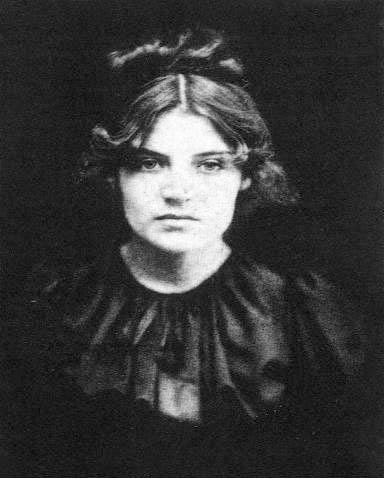
French artist Marie-Clementine Valadon was born September 23, 1865 into extreme poverty to an unmarried laundress in Montmartre. She attended school until aged eleven years old after which she began working to help support her mother.

AROUND the age of 15 Marie began working in the circus as an acrobat. The same circus that was often visited as well as painted by Toulouse-Lautrec and Bertha Morisot. However, after a year of perfecting her craft as a featured trapesze artist, Marie suffered a serious fall that injured her back leaving her unable to continue with her chosen profession.

After her devastating injury, along with a friend, Marie took a chance at modelling for local artists’ in their atelier studios that populated Montmartre. Soon, she became one of the popular choices as a model.

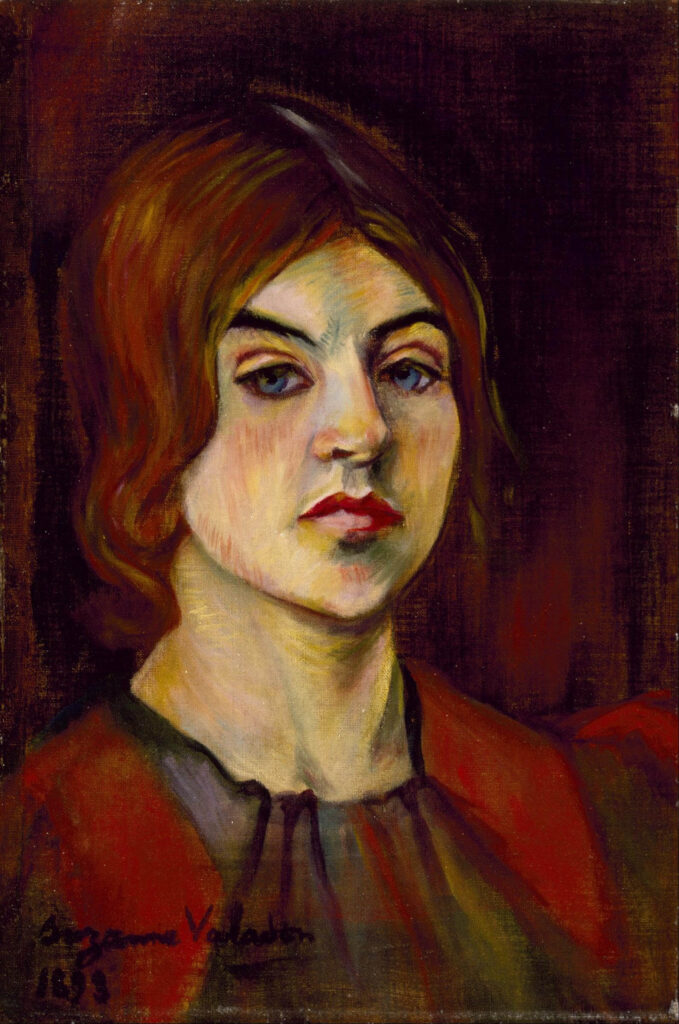
Self-Portrait ~ 1893

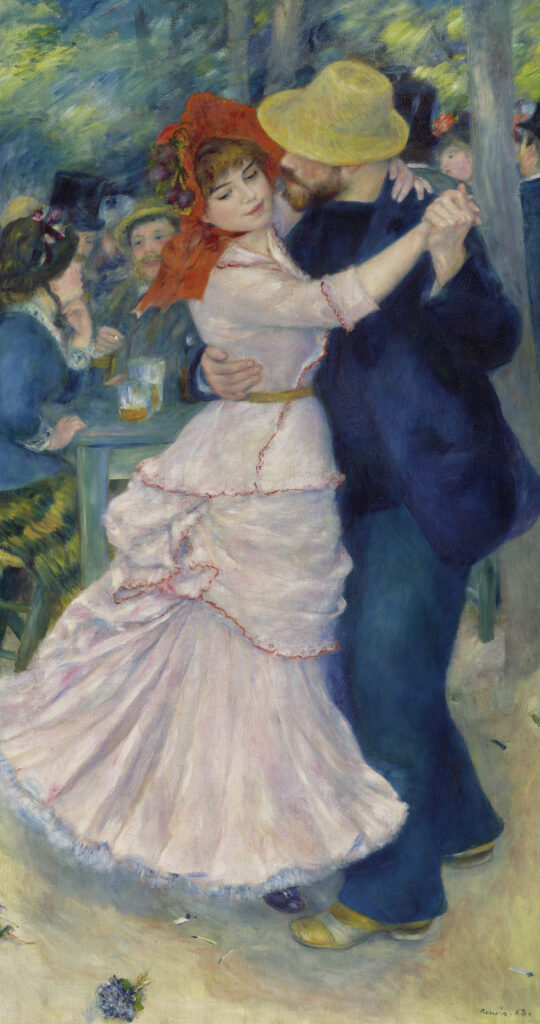
Dance at Bougival 1883 by Renoir

Model for RENOIR

From 1880 to 1893 Suzanne modeled for the most influential artists of the period: Edgar Degas, Berthe Morisot, Pierre-Cécile Puvis de Chavannes, Théophile Steinlen, Pierre-Auguste Renoir, Jean-Jacques Henner, and Henri de Toulouse-Lautrec.

Suzanne befriended Edgar Degas in 1890, while remaining his friend until his death in 1917. He became the first person to purchase her art, teaching her soft-ground etching.

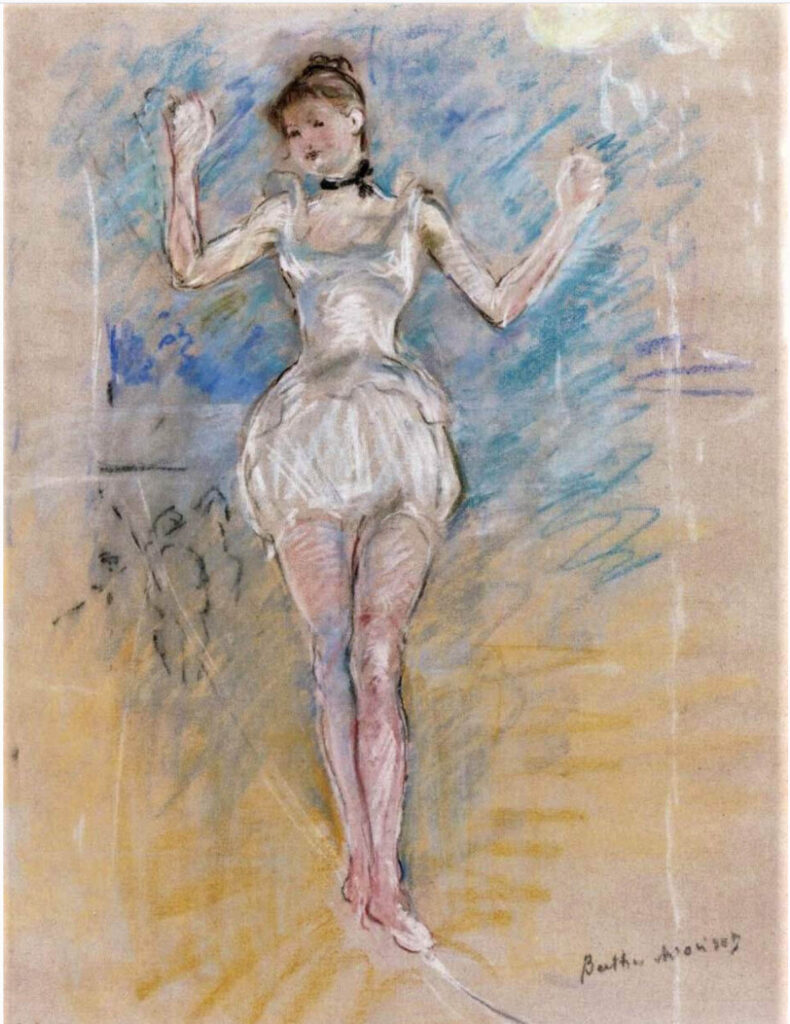
Tightrope Walker c.1880 (Valadon) by Berthe Morisot ~ Pastel

Model for MORISOT

The Hangover by Toulouse-Lautrec (upper left); Girl Braiding Her Hair c.1885 by Renoir (upper right) Valadon 1885 by Renoir (lower left): Suzanne by Toulouse Lautrec (lower center) Suzanne by Renoir (lower right)

After modeling for Toulouse-Lautrec for two years, 1886-1888, the artist suggested Marie change her name to Suzanne because he felt the new identity would suit her better.

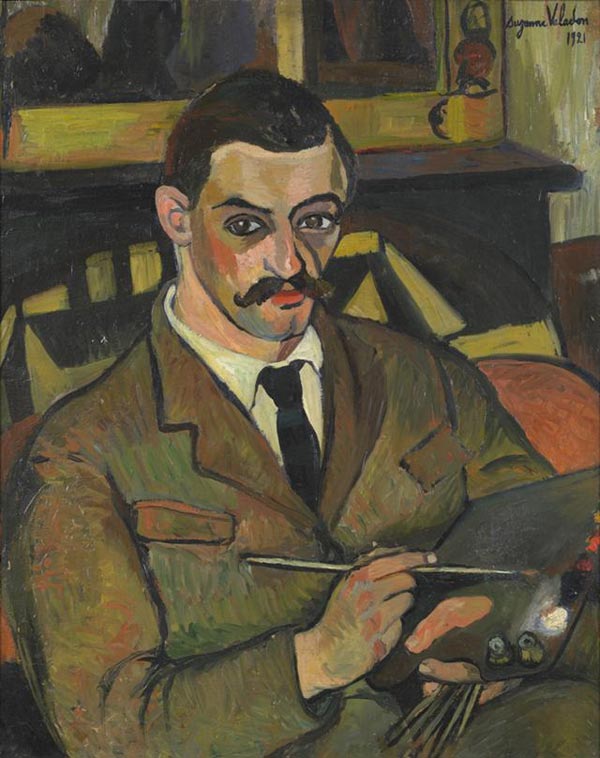
The Abandoned Doll c.1921 ~ Portrait of Maurice Utrillo ~ Self-Portrait c.1883

Portrait of Suzanne Valadon by Miquel Utrillo c. 1891 ~ Joy of Life c.1911 by Suzanne Valadon

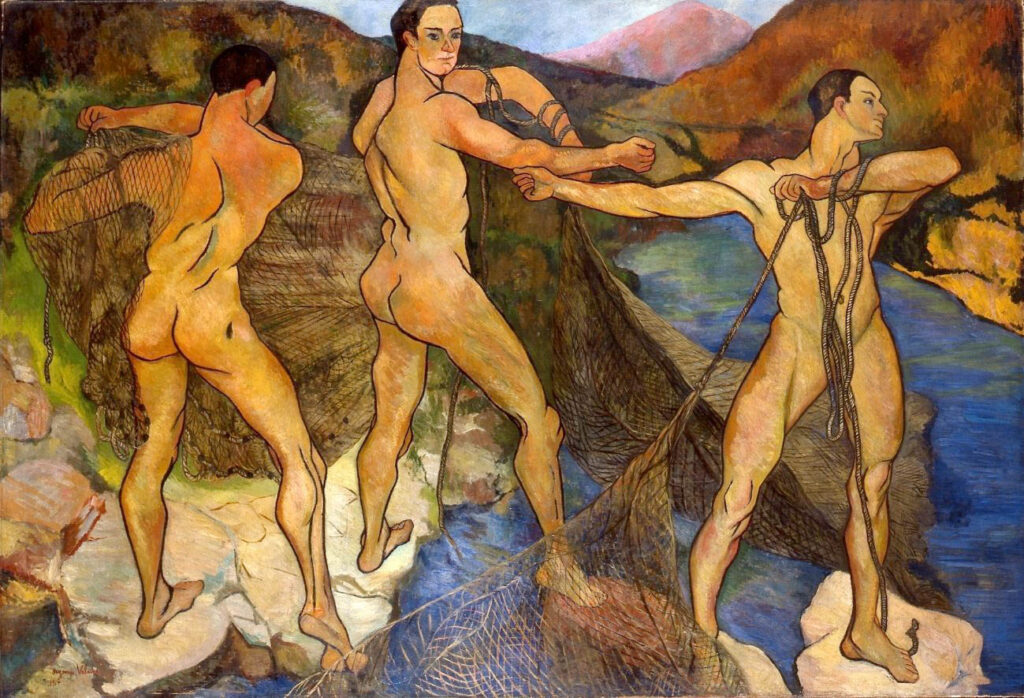
Casting The Net c. 1914 by Suzanne Valadon


2003.156.30, primary

The Blue Room by Valadon (upper left): Woman c.1928 by Valadon (upper right): Nudes c.1918 ( lower left): Portrait of Maurice Utrillo (lower center): Nudes c.1895 Valadon (lower right)


Life With Basket of Flowers c.1928 (upper left): Life With Tulips and Fruit Bowl c.1924 (upper right): Bouquet of Flowers (lower left)

The French Painter Maurice Utrillo was born Maurice Valadon on 26 December 1883 to Valadon when she was 18. He was taught by his mother and favored painting the local scenes of Montmartre. He soon becoming recognized and his created art became sought after.

Maurice Utrillo by Suzanne Valadon c.1921

Home » Historical Observations » Hail To The Girls

CLASSICAL Decorative Arts BLOG™ 2009-2026 – CLASSICAL DECORATIVE ARTS by Cynthia™ 1992 -2017

A gold and black 2 5 years anniversary logo

CREATED BY CDA DESIGNS© 2026

copyright© 2009-2026 ~ CLASSICAL Decorative Arts BLOG™ ~ page layout and web content© ~ all rights reserved

Related Posts

  • Marie BRAEQUEMOND: a little known IMPRESSIONISTmarie_braquemond
    In relation to
    Hail To The Girls
  • PRIVATE Commissions
    In relation to
    Past Work
  • The Perfect Color
    In relation to
    Blog Posts
  • GILDING: Using Dutch MetalA gold frame with some type of ornate design on it
    In relation to
    PRIVATE Commissions
  • SOFONISBA Anguissola
    In relation to
    Hail To The Girls
  • IMPRESSIONIST Pioneers: Berthe Morisot and Mary Cassatt
    In relation to
    Hail To The Girls

Filed Under: Hail To The Girls

SOFONISBA Anguissola

by

…more artistic musings

Home » Historical Observations » Hail To The Girls

SOFONISBA Anguissola (1532-1625) worked professionally during the Late Renaissance and was the first of women artists to gain recognition doing so.

BETWEEN THE AGE of eleven and thirteen, when young girls were restricted with their education and artistic training during that period, her father encouraged and financially supported her apprenticeship with Bernardino CAMPI. By 1549, the young artist was being tutored by Bernardo GATTI.

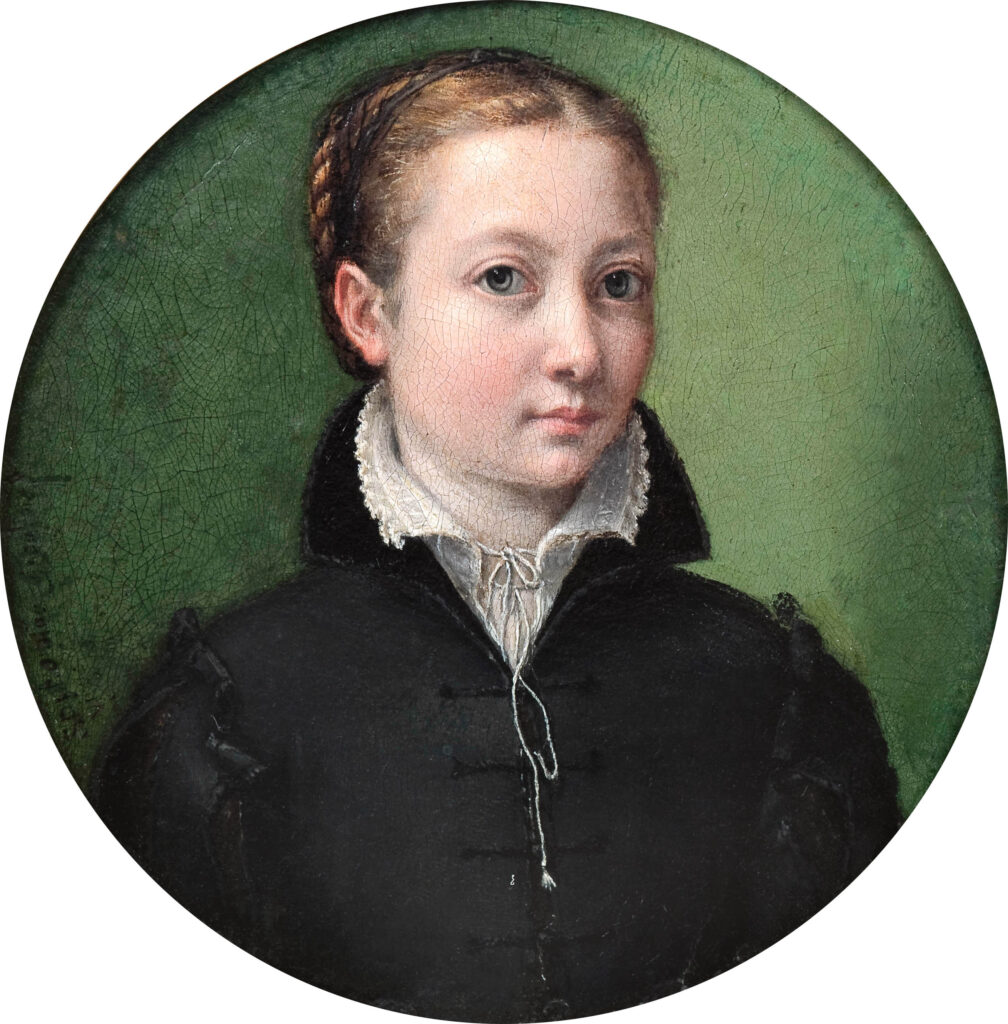
Self-Portrait

siblings;group portrait;dog;spaniel;family portrait;formal;seated;fan;headdresses;headdress;renaissance;c16th;c17th

Three Children Oil on Panel ~ Self-Portrait at the Keyboard

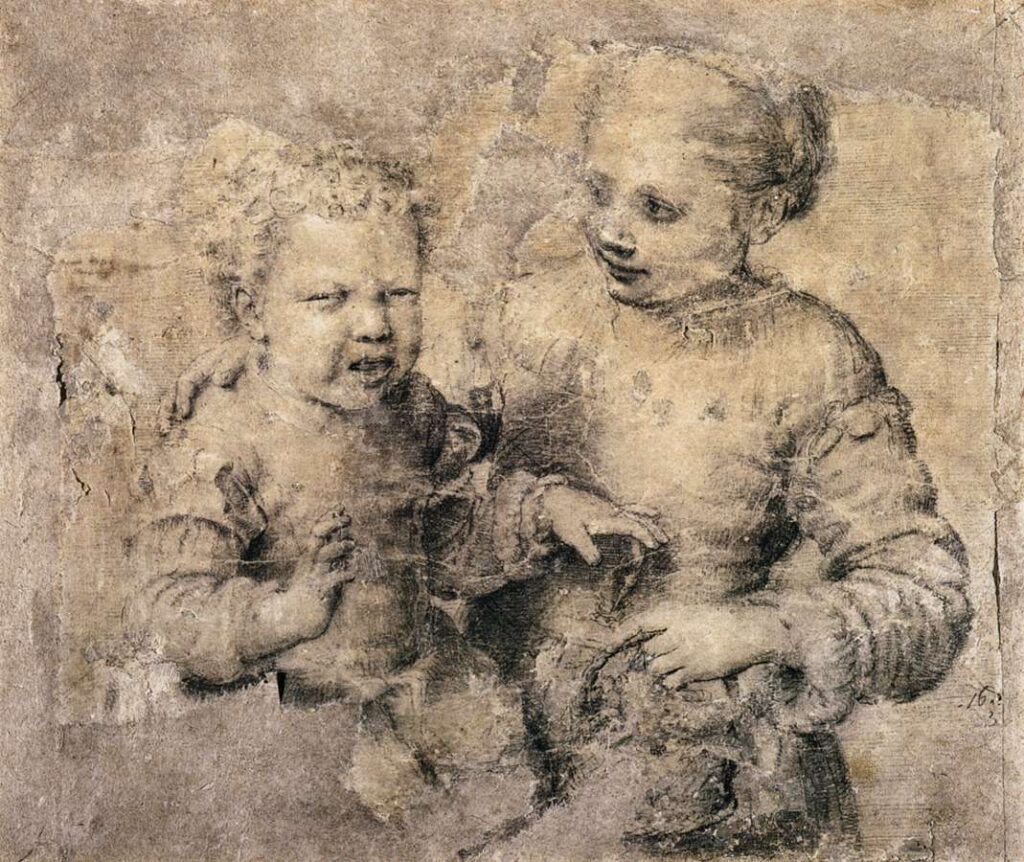
By 1550’s SOFONISBA’S extraordinary talent was beginning to spread. After seeing one of the artist’s charcoal and pencil drawings, Child Bitten by a Sea Crab, did not fail to impress the famous MICHELANGELO.

Child Bitten by Sea Crab c.1554 Charcoal and Pencil

Portrait of a Young Monk c. 1562 Oil on canvas ~ Portrait of the Anguissola Family c. 1558

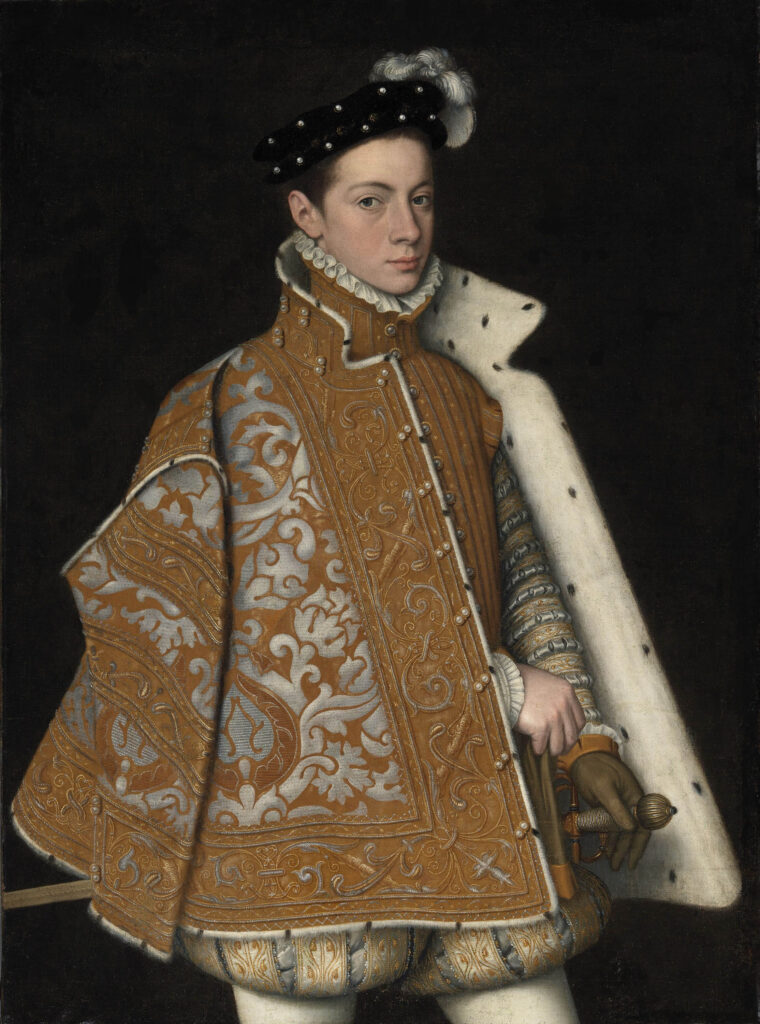
Portrait of Alessandro Farnese c.1560 Oil on canvas

The young Italian prince is represented clothed his brilliant embroidered cloak lined with ermine.

Portrait of a Young Woman (Isabel Clara Eugenia, c.1573) Oil on canvas

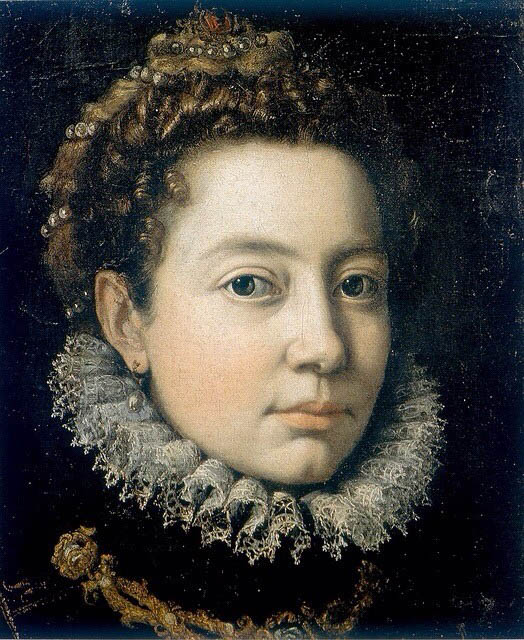
Self-Portrait c. 1560

Portrait of Diane d”Andouins and her daughter c.1565

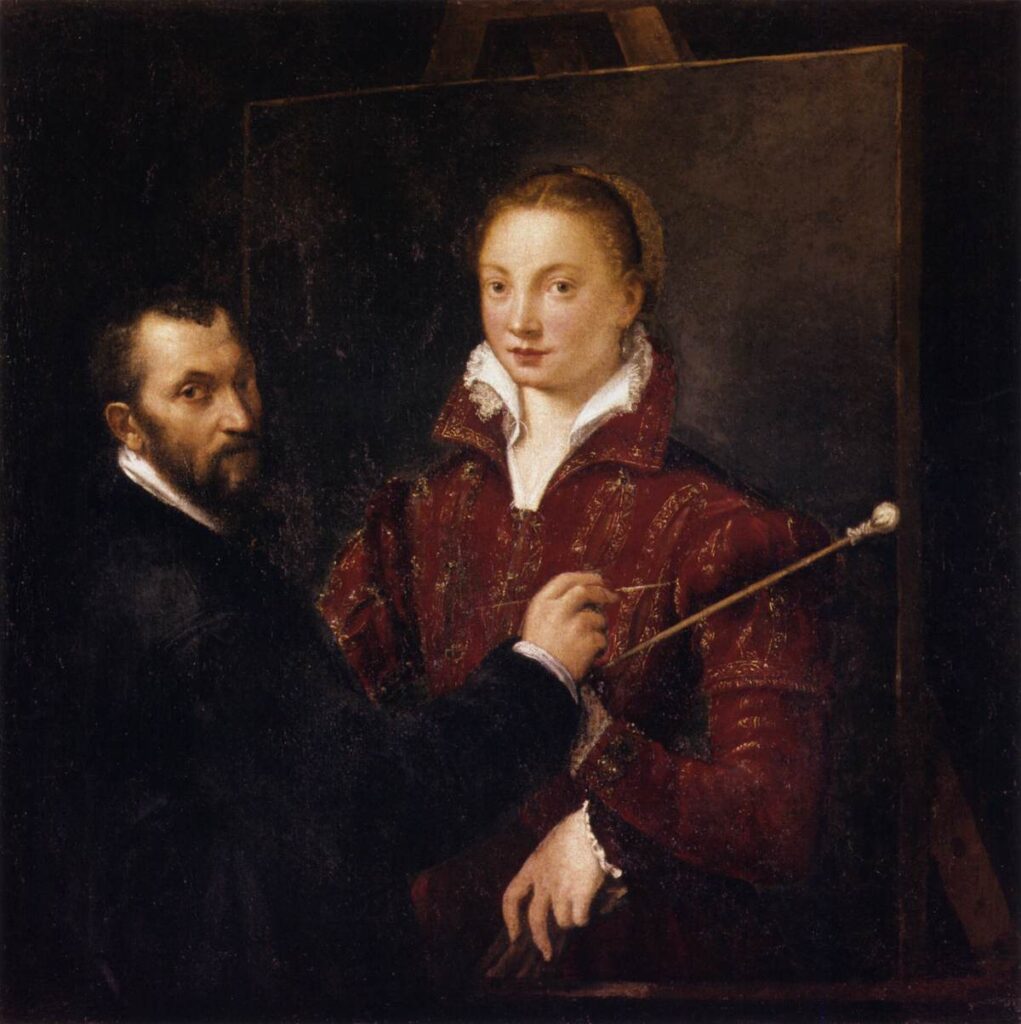
Bernardo Campi’s portrait of Sofonisba Anguissola by Sofonisa c.1559

Double portrait of Sofonisba by Sofonisba and her teacher Campi. Recent restoration to the painting reveal that the artist painted right arm twice.

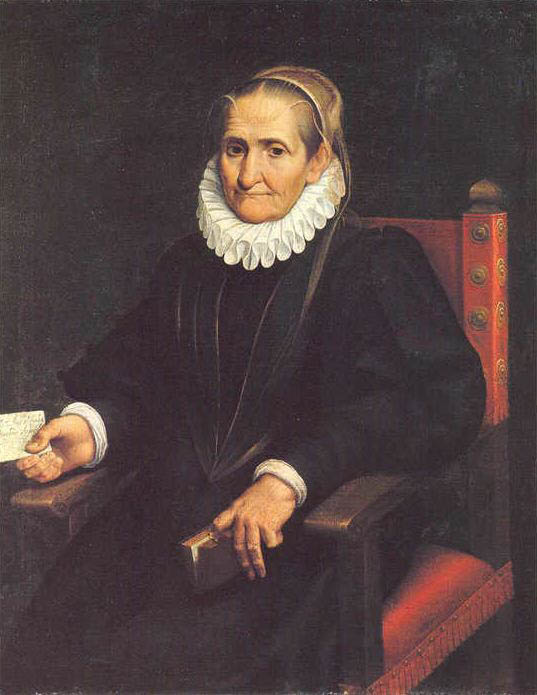
Cattolica Barbo Anguissola (Sofonisba Anguissola, Self-Portrait, ca 1610)

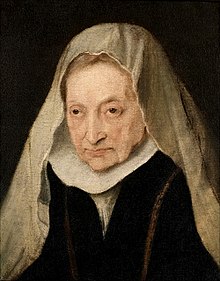
Sofonisba Anguissola at 92 by Anthony va Dyck c. 1624 Oil on canvas

Anthony Van Dyke became interested in personally meeting the female artist who painted the King of Spain and corresponded with Michelangelo. During the 1624 visit with 92 year old Sofonisba, Van Dyke painted this oil and observed in his sketchbook:

“She told me how she was a miraculous artist of life and the greatest torment she had known was not being able to paint anymore because of her deteriorating eyesite. Her hand was still steady without any trembling.”

Further Reading:

Sofonissba Anguissola, Biogaphy, Work and Legacy: Maria Tsanceva

SOFONISBA”S LESSON, A Renaissance Artist and Her Work: Michael W. Cole

Home » Historical Observations » Hail To The Girls

CLASSICAL Decorative Arts BLOG™ 2009-2026 – CLASSICAL DECORATIVE ARTS by Cynthia™ 1992 -2017

A gold and black 2 5 years anniversary logo

CREATED BY CDA DESIGNS© 2026

copyright© 2009-2026 ~ CLASSICAL Decorative Arts BLOG™ ~ page layout and web content© ~ all rights reserved


RELATED POSTS
  • MILWAUKEE Art Museum
    In relation to
    Museum Visits
  • HAIL TO THE GIRLS
    In relation to
    Historical Observations
  • IMPRESSIONIST Pioneers: Berthe Morisot and Mary Cassatt
    In relation to
    Hail To The Girls
  • Marie BRAEQUEMOND: a little known IMPRESSIONISTmarie_braquemond
    In relation to
    Hail To The Girls
  • SUZANNE Valadon
    In relation to
    Hail To The Girls
  • LIZ STEEL Online Education
    In relation to
    Blog Posts

Filed Under: Hail To The Girls

IMPRESSIONIST Pioneers: Berthe Morisot and Mary Cassatt

by

…more artistic musings


Home » Historical Observations » Hail To The Girls

TO ATTEND AN ACADEMY 1850’s a woman needed the approval from a male guardian. These social restrictions existed worldwide for women and were strictly enforced. Females who participated in an Academy’s curriculum were not only excluded from attending the life-drawing classes but also prohibited from competing in the history painting category of the Salon competition.


THE TALE OF THE TWO


STRICT rules existed regarding the appropriate behavior of the positioned social elite woman during the nineteen hundreds. For instance, it was not acceptable for a woman to be alone in a room with a man if he was not her father or brother. To fill her time she was encouraged to pursue light domestic activities that might include music, sewing, flower arranging or watercolor painting. Few women choose to extend these limiting boundaries. For, it was considered unconventional for woman of middle-class status to be desirous of obtaining a profession because they were not expected to do paid work.

To attend an Academy that taught the applied arts in the 1850s, a woman needed the approval from her male guardian. Regardless of the institutions’ geographical location the same social restrictions for women existed worldwide and were strictly enforced. And, if indeed the young woman received permission to attend an art academy there still remained obstacles in her path.  Not to mention that it was considered unacceptable and therefore not permitted to sketch a fully clothed male model. Therefore, female students who participated in an Academy’s curriculum were not only excluded from attending the life-drawing classes but also prohibited from competing in the history painting category of the Salon competition.  The former was important to build strong drawing skills while the latter was necessary to insure the artists financial survival.

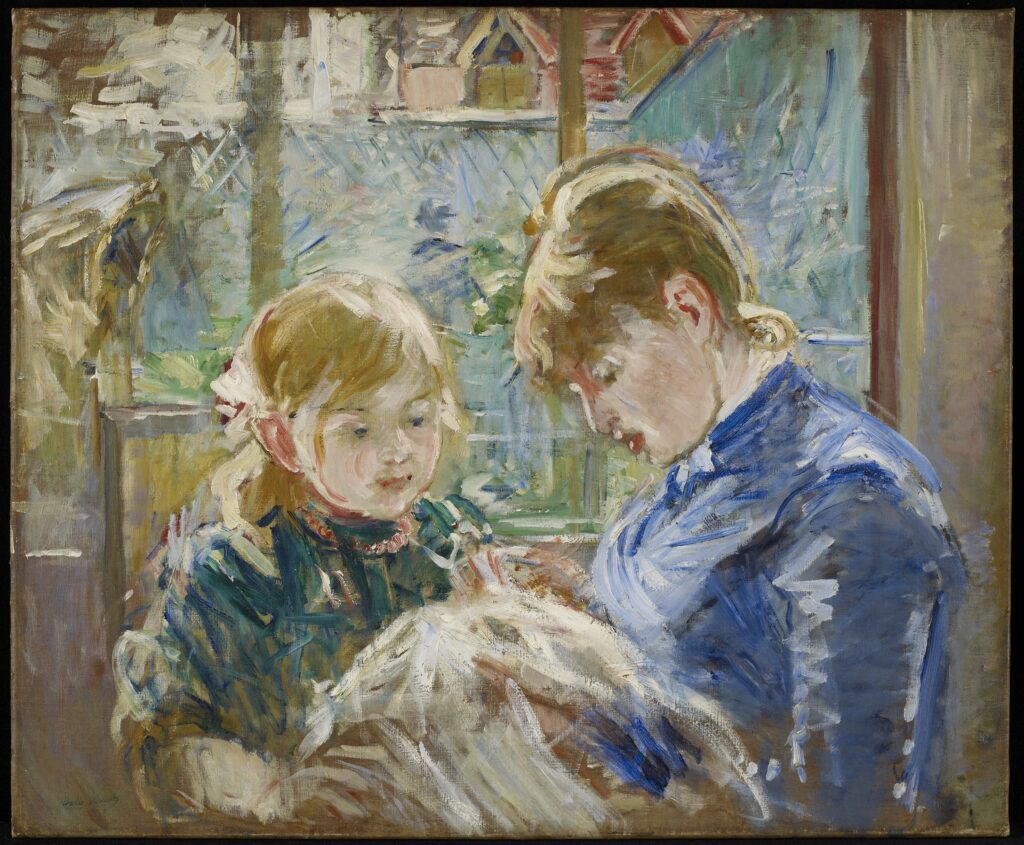
The Artists’ Daughter, Julie, with her Nanny c. 1884 by Berthe Morisot

One woman who broke with tradition was Berthe Morisot (1841-1895). Morisot was born into an artistic family and was fortunate enough to receive encouragement to pursue her vision. She and her sister began their training in the mid-1850s by copying the Old Masters in the Louvre. From their very first meeting, Manet recognized and supported Morisot’s artistic pursuits, suggesting that she join the Independents.

Sisters c.1869_berthe morisot

Hanging the Laundry Out to Dry by Berthe Morisot (upper left): Oil ~ Berthe Morisot: Reading by Berthe Morisot (middle left): Berthe Morisot ~ Oil (bottom right): Sisters c.1869 Berthe Morisot (bottom left)

Consequently, Berthe was the only woman to exhibit with Monet, Renoir, Pissarro, Sisley, and Bazille at the first IMPRESSIONISTS‘ Salon in 1874. After this first exhibit together she remained loyal to the group by refusing to submit works to the Beaux-Arts yearly Salon competition. Throughout her life she remained closely associated with the Impressionists. During her career her paintings were in high demand and brought the highest prices of any in the group. She married Manet’s brother Eugene in 1874.

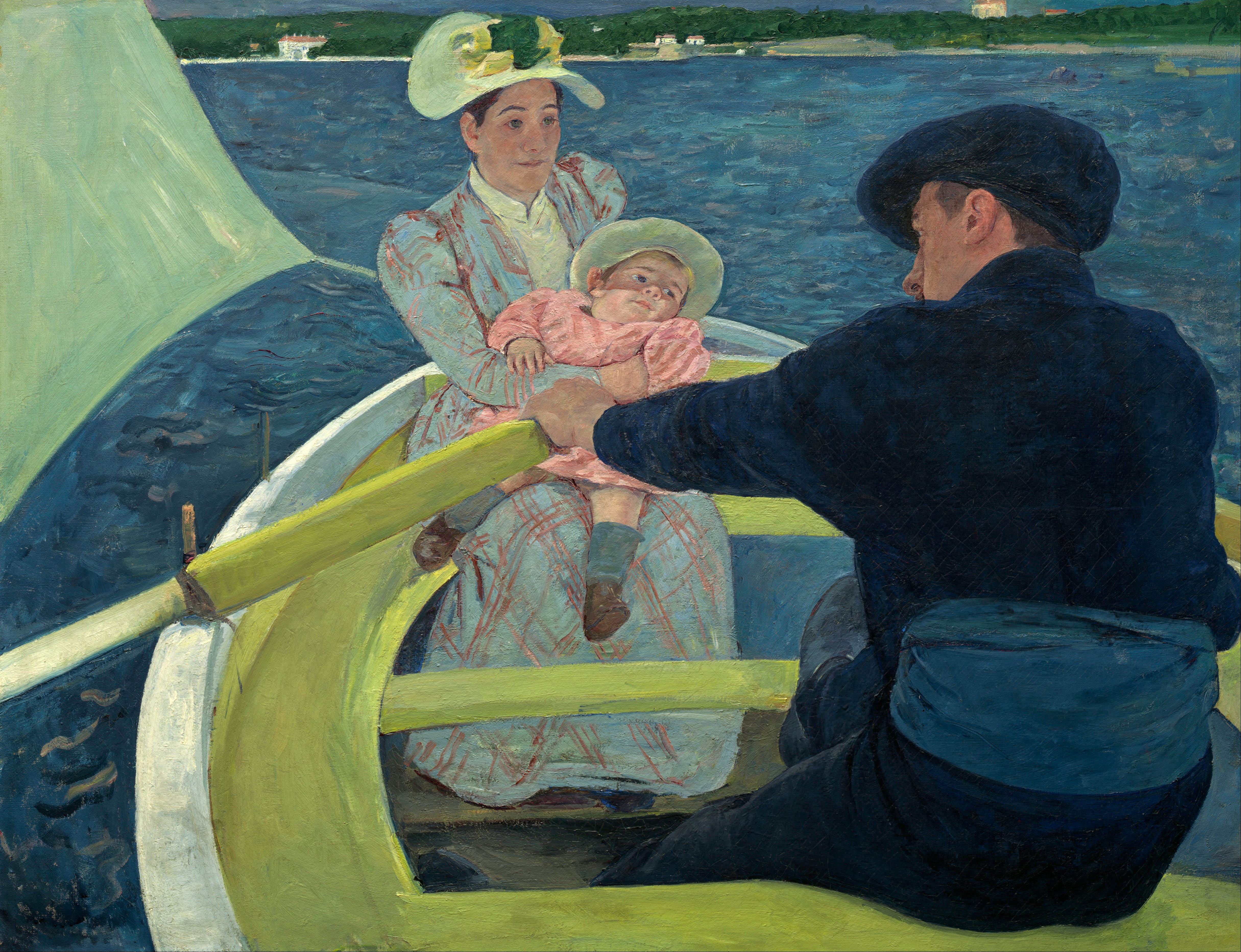
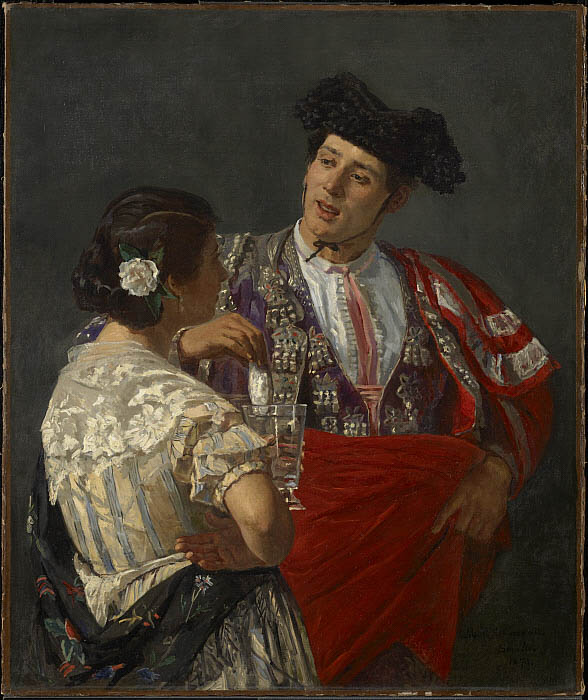
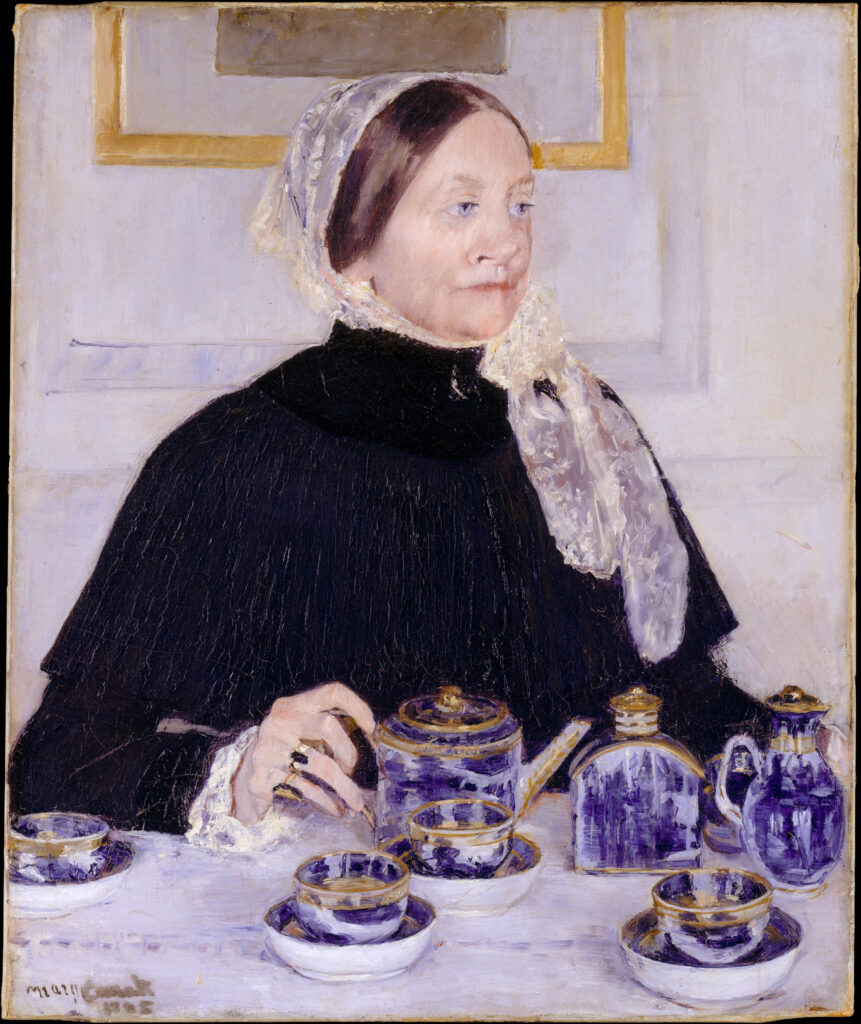
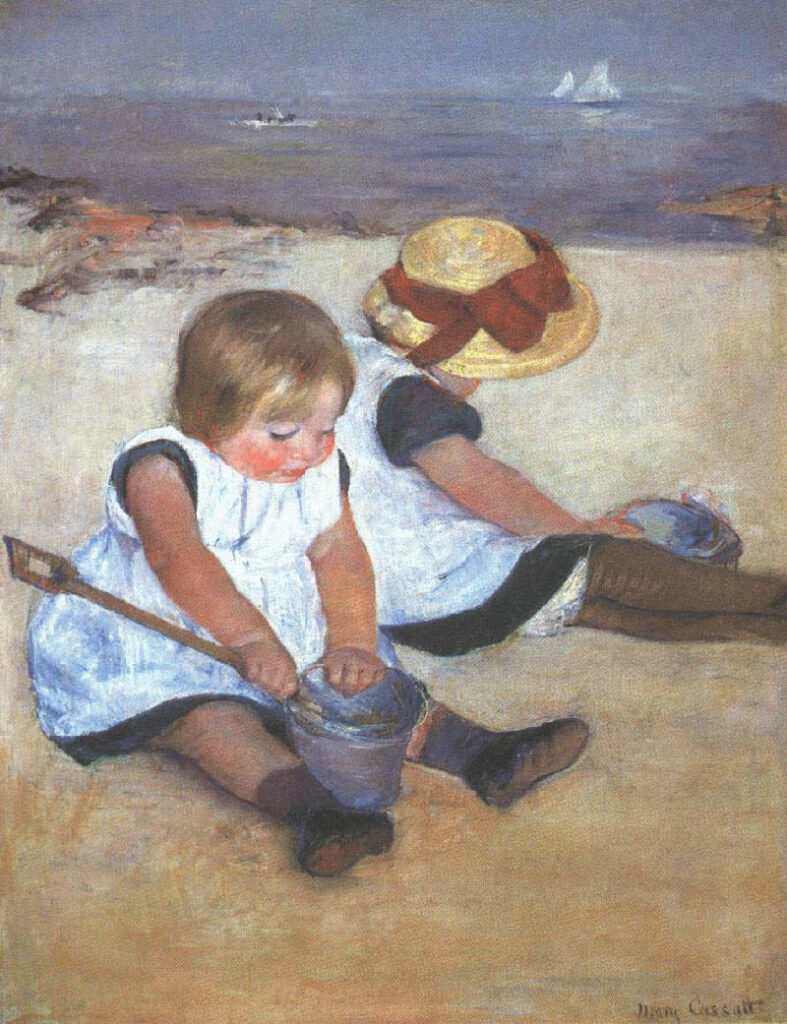
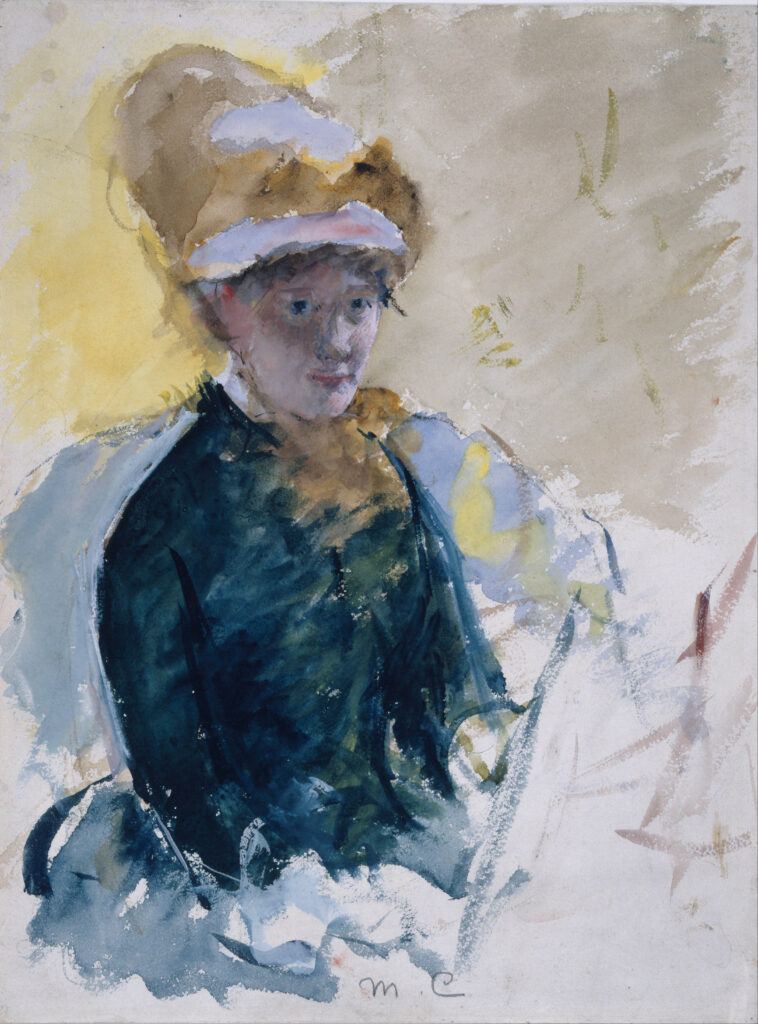
Second to follower her convictions was Mary Cassatt (1845-1926). Born in Pennsylvania, to wealthy parents. Over the objections of her father she moved to Paris to study painting after completing studies at Philadelphia Academy of Fine Arts. Like Morisot, Cassatt also studied the Old Masters but on location in Italy.Her work attracted the enthusiastic attention of Degas while she was exhibiting at the Beaux-Arts Salon in 1875. That first meeting developed into a lifelong friendship for the two of them.

Offering the Panel to The Bullfighter c.1873 Mary Cassatt

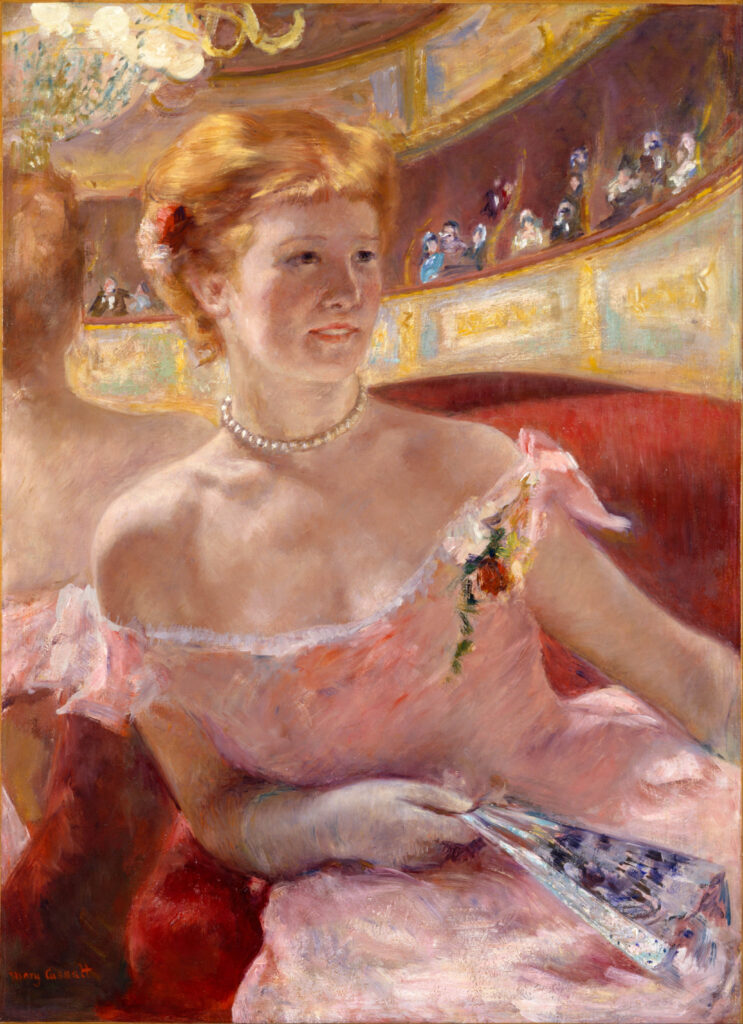
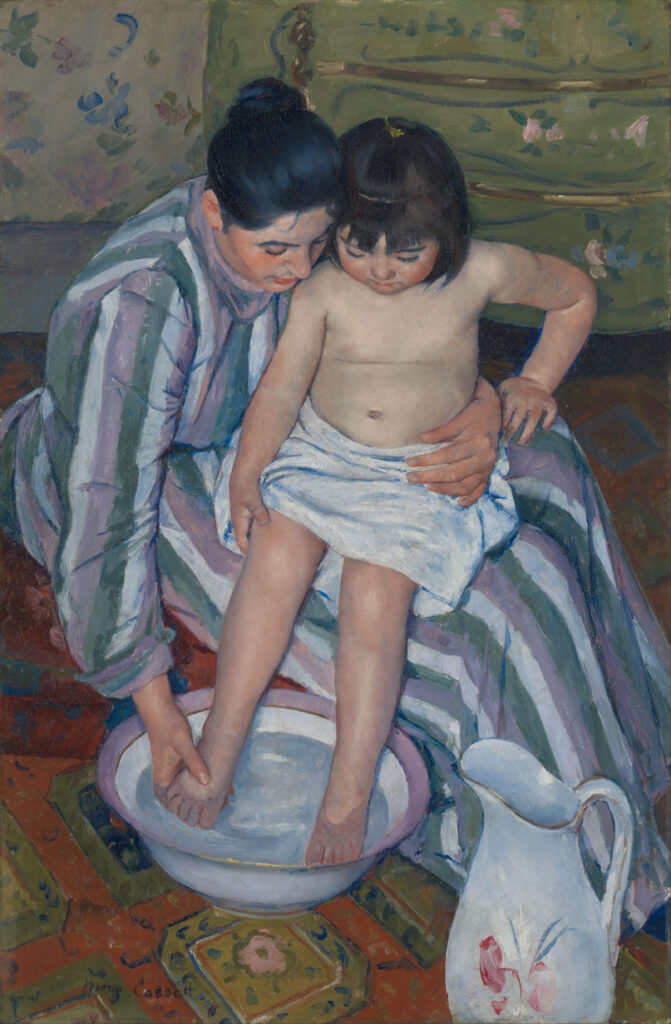
Woman with Pearls c.1879 (upper left): The Child’s Bath c.1893) by Cassatt: Lady at the Tea Table c.1883 by Cassatt (upper right): Children on the Beach c.1884 by Cassatt (lower left): Self Portrait c.1880 by Cassatt (lower right)

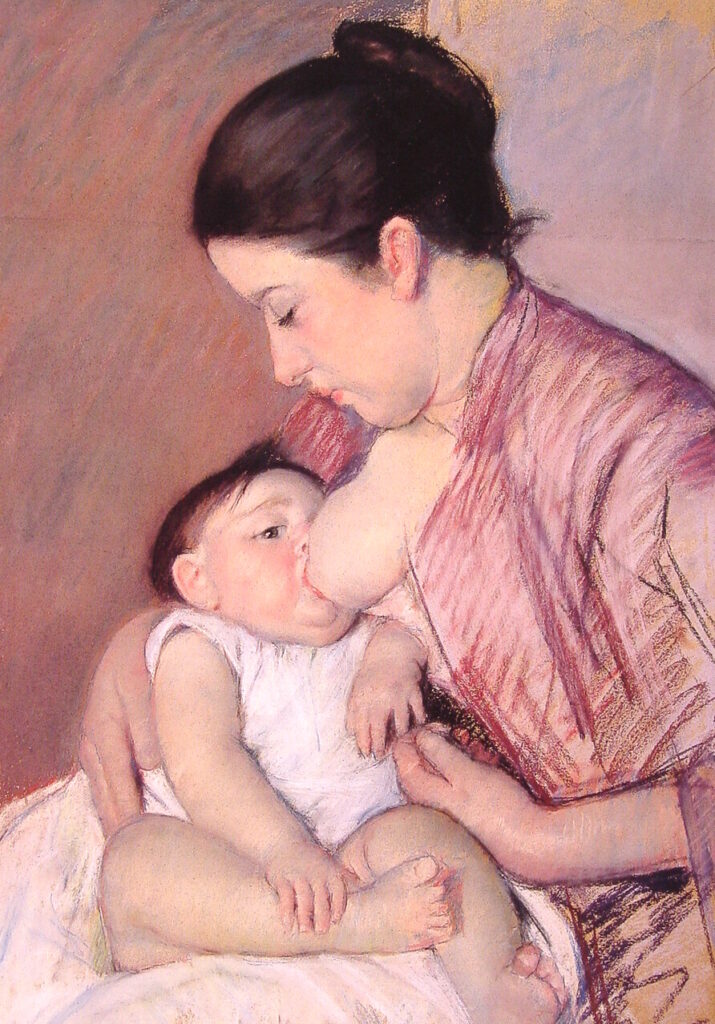
Maternite c.1890 by Mary Cassatt

Nurse Reading to a Little Girl c.1895 (left): Mother and Child Before a Pool c.1898 by Cassatt (upper right): Lydia At The Tapestry Loom c.1881 (lower right)

Reine LaFabre and Margot Before A Window c.1902 by Mary Cassatt

Cassatt enjoyed both a long and successful career so much so that upon her death in 1926 she was completely financially independent without having to rely on assistance from her family in later years. Her support of the Impressionists and influential connections helped establish their presence in private American collections and awareness in today’s museums.

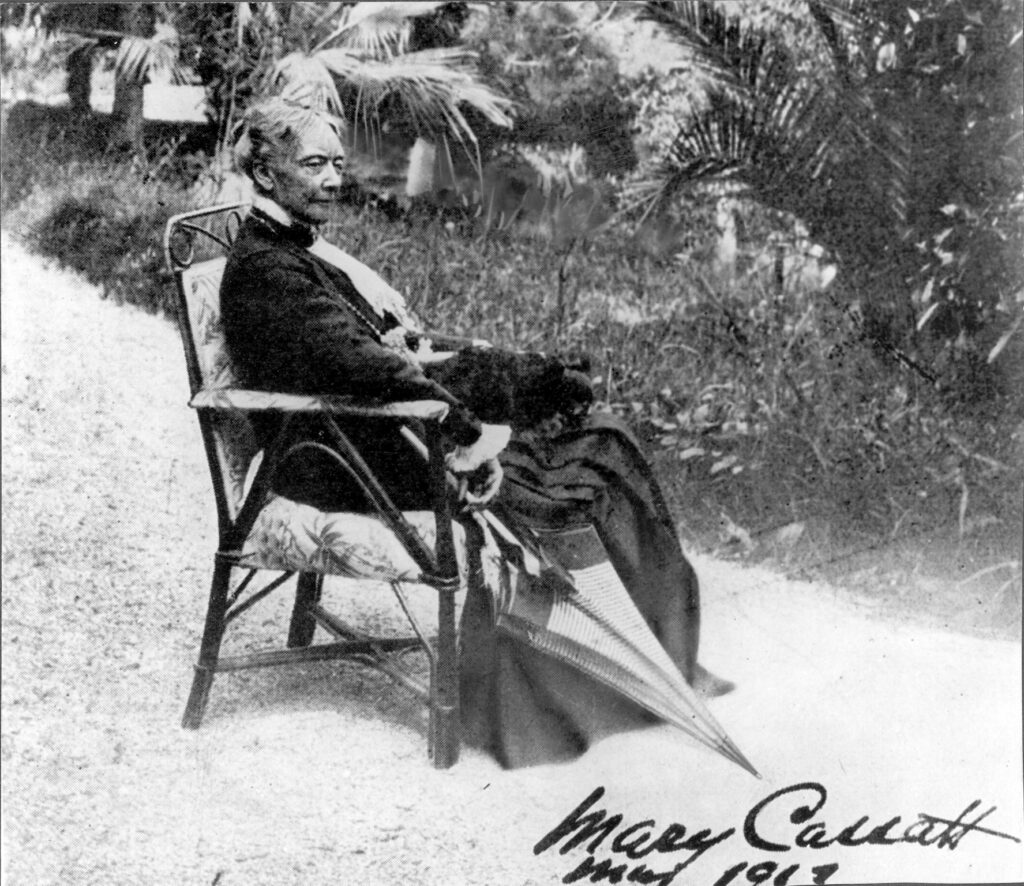
Photograph of Mary Cassatt c.1913

Unlike Morisot and Cassatt the female student of today does not have restrictions placed on her curriculum. Gallery attendees can appreciate all forms of landscape, still life, history and portrait painting without regard as to which gender painted what picture. Created by both men and women without restrictions, rules or guidelines.

Cynthia


Home » Historical Observations » Hail To The Girls

CLASSICAL Decorative Arts BLOG™ 2009-2026 ~ CLASSICAL DECORATIVE ARTS by Cynthia™ 1992-2017

A gold and black 2 5 years anniversary logo

CREATED BY CDA DESIGNS© 2026

copyright© 2009-2026 ~ CLASSICAL Decorative Arts BLOG™ ~ page layout and web content© ~ all rights reserved
Related Posts
  • HAIL TO THE GIRLS
    In relation to
    Historical Observations
  • Okay, I’LL HANG IT SOMEWHERE ELSE – IMPRESSIONISTS part 1
    In relation to
    Historical Observations
  • SUZANNE Valadon
    In relation to
    Hail To The Girls
  • THE BEGINNINGS
    In relation to
    Historical Observations
  • Marie BRAEQUEMOND: a little known IMPRESSIONISTmarie_braquemond
    In relation to
    Hail To The Girls
  • Okay, I’LL HANG IT SOMEWHERE ELSE – IMPRESSIONISTS part 2A painting of boats in the water with a sunset.
    In relation to
    Historical Observations

Filed Under: Hail To The Girls Tagged With: beaux-arts, berthe morisot, degas, impressionists, mary cassett

Primary Sidebar

Recent Posts

  • Marie BRAEQUEMOND: a little known IMPRESSIONIST
  • TURNS OUT MICHELANGELO WORKED the GIG ECONOMY
  • The Perfect Color
  • The Adventures of a Website Muse
  • POMPEIAN Room Recreated
  • STENCILS

BLOG Contents

  • Homepage
  • Past Work
    • PUBLIC Commissions
      • HISTORICAL Restoration at Chicago Theatre
      • RESTORATION at The Mayslake Peabody Estate
      • HISTORICAL OSC in Springfield IL
      • LOUIS SULLIVAN and the Chicago Stock Exchange
      • The HISTORIC CABLE HOUSE in Chicago – Louis Sullivan
      • George WASHINGTON Savings Bank Orland Park IL
      • FAUX Bois ~ FAUX Marble
      • STENCILS
      • PROCUREMENT: Business AWARDS
    • PRIVATE Commissions
      • POMPEIAN Room Recreated
      • GILDING
        • GILDING: Using Dutch Metal
        • The SCHIBIN Ceiling
      • 18c Parchment Restoration
      • Traditional OLD WORLD Restoration
  • BLOG POSTS
    • The Perfect Color
    • The Adventures of a Website Muse
    • LOUIS SULLIVAN Rediscovered : Lecture
    • MODEL MARATHON
    • LIZ STEEL Online Education
  • MUSEUM VISITS
    • MILWAUKEE Art Museum
    • CANOVA: Sketching in Clay
  • HISTORICAL OBSERVATIONS
    • THE BEGINNINGS
      • Okay, I’LL HANG IT SOMEWHERE ELSE – IMPRESSIONISTS part 1
      • Okay, I’LL HANG IT SOMEWHERE ELSE – IMPRESSIONISTS part 2
    • IT’S ALL BEEN DONE BEFORE
    • COLOR CHOICES and APPLICATIONS
      • PAINT IT ANY COLOR AS LONG AS ITS BLUE
    • HAIL TO THE GIRLS
      • Marie BRAEQUEMOND: a little known IMPRESSIONIST
      • SOFONISBA Anguissola
      • IMPRESSIONIST Pioneers: Berthe Morisot and Mary Cassatt
      • SUZANNE Valadon
    • HEY…are ya gunna pay me?
      • TURNS OUT MICHELANGELO WORKED the GIG ECONOMY
      • MICHELANGELO: The Man and The Myth
  • GALLERY
    • TRAVEL SKETCHING: Liz Steel Classroom
    • INTERNATIONAL SALON
    • DRAWINGS
    • WATERCOLOR
    • OIL PAINTING
  • Contact Us
A painting of an old vase and other objects
Salon 2013 Exhibition Panel Oil on Cambric Linen

Keep up-to date

Subscribe for BLOG Updates

Please enable JavaScript in your browser to complete this form.
Name *
Loading